Change fails far more often due to a leadership gap than to a strategy gap. Most organizations already have solid processes, timelines, and communication plans in place.
What’s missing is leaders equipped with the leadership capabilities to actually carry people through the uncertainty those processes stir up. A plan on paper doesn’t build trust. A human does.
Growth, new technology, restructuring, and shifting markets: all of these demand more than a project plan. They demand leaders who can build trust, hold steady under pressure, and help teams see change as an opportunity rather than a threat.
Why Change Is More Challenging Than Ever
Change used to show up once in a while. Now it’s constant, layered, and often stacked on itself, placing far more weight on the people leading through it.
Rapid Technological Advancements
Digital transformation and AI are rewriting job descriptions faster than most training programs can keep pace.
Leaders now have to walk teams through tool changes and role shifts that didn’t even exist a year earlier. Waiting for the technology to settle down first isn’t a strategy anymore.
Evolving Employee Expectations
Employees expect more transparency, more flexibility, and more purpose than previous generations did. Leaders who still communicate and support teams the old way often end up managing quiet disengagement instead of real buy-in.
This phenomenon isn’t a passing trend, either. It’s a permanent shift in what people expect from whoever’s leading them.
Constant Organizational Transformation
Mergers, restructuring, remote work, and rapid growth: transformation has become a permanent condition, not an occasional event. Leaders who treat every change as a one-off find themselves unprepared when the next one comes.
Building change readiness, adaptability, and resilience into everyday leadership, rather than treating them as a special project, is what separates the organizations that adapt from the ones that scramble.
Why Leadership Capabilities Matter During Change
Every phase of change runs through people, and people take their cues straight from leadership behavior. Strong capabilities here shape trust, decision-making, and whether change actually sticks.
Building Trust During Uncertainty
Transparent, consistent communication is what earns employee confidence during uncertain stretches. Employees watch what leaders do far more closely than they listen to what their managers say in a town hall.
That kind of honesty, even when the news is bad, builds more credibility than a polished announcement ever could. Employees forgive a difficult truth far faster than they forgive a leader who hid one.
Inspiring Confidence and Resilience
Effective leaders keep teams motivated even when the outcome of a change is still uncertain. Their steadiness becomes the anchor a team borrows when its confidence wobbles.
A leader who visibly panics gives everyone else permission to panic too. Calm is contagious. So is its opposite.
Improving Communication Across Teams
Clear communication cuts off confusion, rumors, and resistance before they take hold. Silence during change doesn’t read as calm. It reads as something being hidden.
In the absence of information, teams fill in the blanks with their own stories, and those stories are almost always worse than the truth.
Guiding Teams Through Difficult Decisions
Capable leaders weigh business goals against employee needs and reach a decision rather than stall. Authentic leadership means publicly taking responsibility for that decision, even when some on the team hate it.
Indecision is the safer choice at first. But it usually costs a leader more credibility than a decision some people disagree with.
The Leadership Capabilities Organizations Need Most
A handful of capabilities keep appearing in leaders who successfully guide their teams through disruption.
Emotional Intelligence
Self-awareness, empathy, and relationship management help leaders gauge a team’s emotional state before it escalates. Skip this step, and the resistance building right under your nose is easy to miss.
By the time frustration shows up in a resignation letter, it’s usually been simmering for months.
Adaptability and Agility
Leaders who embrace change rather than fight it respond faster to new information and obstacles. Rigid leaders end up defending a plan long after it has stopped working.
Agility doesn’t mean scrapping a strategy at the first sign of friction. It means knowing which parts of the plan still serve the goal.
Strategic Thinking
Strategic leaders tie daily decisions to long-term organizational goals, even amid disruption. Without that thread, teams start to feel like every call is reactive instead of purposeful.
That thread of purpose is often exactly what keeps people engaged when the day-to-day work feels chaotic.
Coaching and Empowering Others
Leaders who develop the people around them build ownership and confidence that outlasts any single change initiative. That investment compounds every time the organization faces its next transition.
A team that’s already been coached through one change handles the next with much less hand-holding.
Common Leadership Gaps That Cause Change Initiatives to Fail

Most leadership gaps trace back to a belief the leader never bothered to examine, not a lack of effort or good intentions.
Poor Communication
Plenty of leaders quietly believe knowledge is power, so they share less than their teams actually need. That instinct to hold information close is usually what creates the confusion that leaders later blame on “poor communication.”
Resistance to Change
Some leaders resist change because admitting a new approach is needed feels a little too close to admitting they don’t have all the answers. That fear of looking unprepared often does more damage than the change itself.
Lack of Employee Engagement
Leaders who are promoted for strong individual performance sometimes never unlearn that mindset. They keep optimizing their own output instead of engaging the team they’re now responsible for.
Inconsistent Leadership Behaviors
Fear of being exposed as being over their head pushes some leaders to shift their tone and their decisions depending on who’s watching. Teams notice inconsistencies quickly, and trust erodes with every shift.
How Organizations Can Strengthen Leadership Capabilities
The real fix isn’t a single workshop. It’s developing leaders at every level of the organization, not just the ones who already carry a title.
That gap, building leadership everywhere instead of only at the top, is the missing piece in most change efforts that stall out.
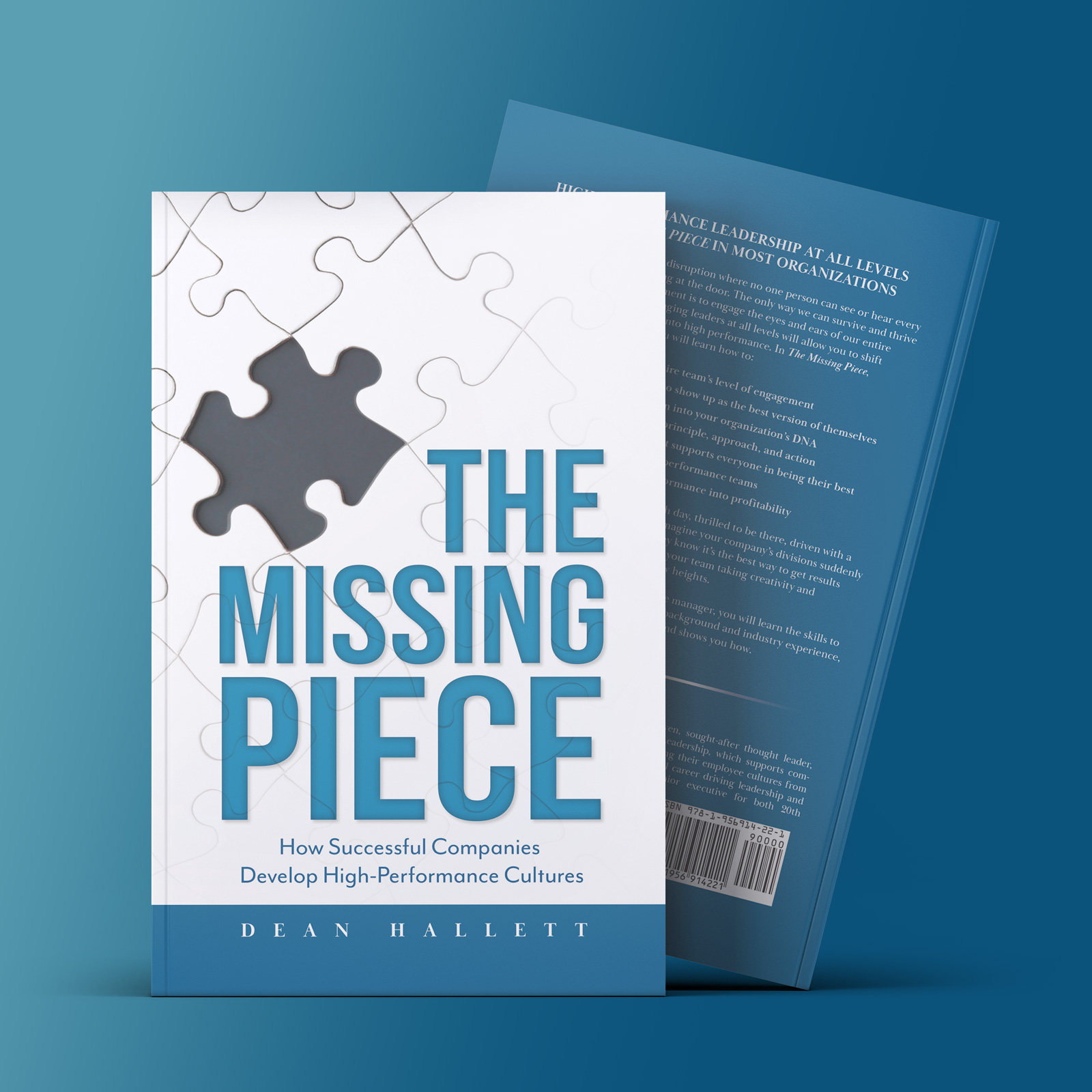
Dean Hallett writes about exactly this in The Missing Piece, his book on how the strongest companies develop leaders at every level.
Invest in Leadership Development Programs
Leadership development programs prepare people for real-world pressure long before a crisis forces them to learn on the fly. Waiting until someone gets promoted to start building these skills is already too late.
Develop Self-Awareness Through Assessments
Behavioral assessments help leaders see their own strengths and blind spots clearly. Interestingly, most leaders are harder on their team’s blind spots than they are on their own because they do not see their own clearly.
Provide Executive Coaching and Mentorship
Executive coaching accelerates growth in a way group training rarely manages on its own. Personalized coaching builds confidence and accountability that holds up long after the session ends.
Reinforce Learning Through Real-World Practice
Experiential learning, peer collaboration, and ongoing feedback turn concepts into habits leaders actually use. A leadership idea that never gets tested under real pressure quietly fades within a few weeks.
Leadership During Change vs. Managing Change (Quick Comparison)
Managing change focuses on processes, timelines, and implementation. Leading through change focuses on inspiring people, building trust, and driving behavior that lasts well past the project plan.
| Factor | Managing Change | Leading Through Change |
| Primary Focus | Processes and timelines | Inspiring and guiding people |
| Success Measure | On-time, on-budget delivery | Sustained trust and adoption |
| Communication Style | Status updates | Transparent, ongoing dialogue |
| Employee Engagement | Informed after decisions | Involved throughout the process |
| Decision-Making | Rule and process-driven | Values and people-driven |
| Leadership Mindset | Reactive to disruption | Proactive and change-ready |
| Long-Term Impact | Fades once the project closes | Builds lasting organizational capability |
| Organizational Culture | Compliance focused | Trust and ownership-focused |
How Hallett Leadership Builds Leaders for Change
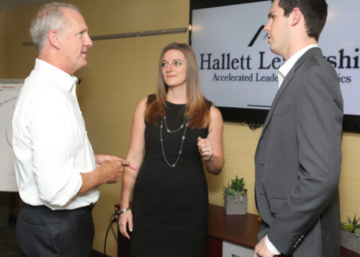
Hallett Leadership helps organizations develop resilient, self-aware, and adaptable leaders through leadership development, executive coaching, and behavioral insight. The approach pairs experiential learning with real workplace application.
The goal isn’t a leader who survives one change. It’s a leader who can guide a team through whatever comes next with confidence still intact.
The Future of Leadership Is Change Readiness
Organizations that keep investing in leadership capabilities adapt faster and innovate more freely than those that treat leadership as a one-time hiring decision. Change readiness is becoming a competitive edge, not a nice-to-have.
The businesses still waiting for calm waters before developing their leaders are going to wait a very long time. In most industries now, calm waters simply aren’t coming back.
Final Thoughts: Strong Leadership Turns Change Into Opportunity
Change isn’t going away, and it isn’t slowing down either. Leaders who wait in hopes that change will subside are always behind the curve for the teams they are supposed to guide.
Leadership capabilities enable organizations to respond proactively to change rather than scrambling when it arrives.
Strong leadership doesn’t just survive disruption; it thrives on it. It turns that disruption into the opportunity a reactive competitor will miss completely.
Frequently Asked Questions
Here are the questions leaders ask most often about leading their teams through change.
What leadership skills are needed to lead through change?
Emotional intelligence, adaptability, strategic thinking, and the ability to coach others through uncertainty are the core skills that separate strong change leaders from everyone else.
How can organizations develop leaders who manage change effectively?
Structured leadership development, behavioral assessments, executive coaching, and consistent real-world practice build the habits leaders need long before a change initiative even begins.
What is the difference between change management and change leadership?
Change management focuses on processes and timelines. Change leadership focuses on people, trust, and behavior, which really determines whether change sticks.
Why do change initiatives often fail?
Most initiatives fail because of unexamined leadership beliefs, like guarding information or fearing exposure, not because the change itself was a bad idea.
How does emotional intelligence improve leadership during change?
Emotional intelligence helps leaders read team stress and resistance early, so they can respond with support instead of discovering the damage after morale has already tanked.
What role does coaching play in leadership development?
Coaching turns leadership insight into consistent behavior through accountability and personalized feedback, something group training alone rarely pulls off on its own.
Hallett Leadership's Accelerated Leadership Program builds this kind of coaching directly into the program itself, not as an optional add-on.
How can leadership assessments improve change readiness?
Assessments reveal blind spots leaders can't see in themselves, giving them a clear, specific starting point for the self-awareness change leadership actually requires.