Leadership is often portrayed as a high-stakes game: fast decisions, bold risks, and big payoffs. But the best leaders don’t leave success to chance. They don’t rely on luck, gut instinct, or one big move to get ahead.
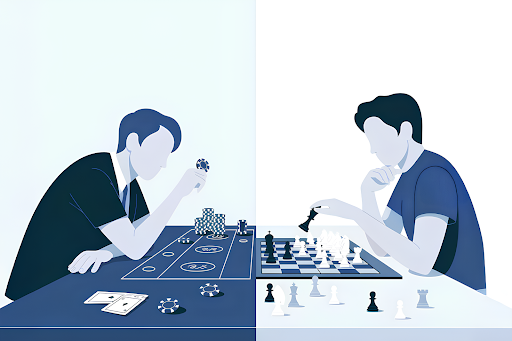
Instead, great leaders think like chess players, not gamblers. They anticipate, strategize, and play the long game.
At Hallett Leadership, we believe that cultivating this mindset is one of the most important shifts any leader can make. Leadership isn’t about reacting, it’s about thinking strategically, leading intentionally, and developing others along the way.
The Gambler vs. the Chess Player: Two Mindsets
Let’s break it down:
- The Gambler bets on outcomes they can’t fully control. The focus is short-term. Success depends on luck, timing, or charm. Risk is a wild card.
- The Chess Player sees several moves ahead. They make deliberate decisions based on pattern recognition, foresight, and long-term strategy. Risk is calculated.
In the world of leadership, this difference is everything.
Gamblers thrive on urgency, often making decisions based on instinct or immediate pressure. That style rarely builds resilient teams or sustainable cultures. It may win in the short term, but it can cost a company its focus, its people, and its future.
Chess-minded leaders, on the other hand, move with clarity and purpose. They understand that every decision has ripple effects. They take time to understand the business environment, people, and internal dynamics before making a move. They think in systems, not silos.
Strategic Thinking Is a Learnable Skill

The good news? Strategic leadership isn’t an innate talent. It’s a developed skill and a core focus of our leadership development programs at Hallett Leadership.
We help leaders shift from reactive to reflective. From scattered to strategic. From chasing outcomes to shaping them.
That includes:
- Cultivating a broader perspective (seeing the full board, not just your corner)
- Developing second- and third-order thinking (what happens after this move?)
- Prioritizing long-term impact over short-term wins
- Thinking in terms of systems, relationships, and influence
Developing Leaders Who Can Think Three Moves Ahead
One of the most important qualities of a strong leader is not just the ability to make great decisions. It’s the ability to develop others to do the same.
Strategic leaders don’t hoard power. They teach their teams to think critically, anticipate challenges, and take ownership of their roles. Just like in chess, where no piece wins alone, leadership is about empowering the full team to act with clarity and confidence.
At Hallett Leadership, we work with executives to grow not just as decision-makers, but as culture-shapers and talent-builders. That’s what separates managers from true leaders.
The Benefits at 20th Century Fox

I joined 20th Century Fox in 2001, shortly after 9-11. Austerity budgets were in place, and no funds had been allocated for leadership development. So, I partnered with HR and we developed a high-potential leadership program to build our bench. We worked with these high-potential individuals so that they understood the value of a high-performance culture, and the value of hiring and developing people that could thrive in that culture.
When a new Chairman took the helm and championed high levels of employee engagement, all of these high-potential leaders were ready to go. They jumped into this new culture and vision with both feet and became culture champions themselves, leading the entire 20th Century Fox team forward.
This change didn’t happen by chance. We had been putting the pieces in place so that when the timing was right, we were ready!
Leadership Is a Long Game

The chessboard of leadership is dynamic; teams change, markets shift, and challenges emerge, but great leaders don’t get rattled. They stay calm, scan the board, and make the next, best move.
They know that leadership isn’t about a lucky break or a single bold risk. It’s about making smart, values-driven decisions again and again.
And they understand this: You win the game by how you play, not just by how it ends.