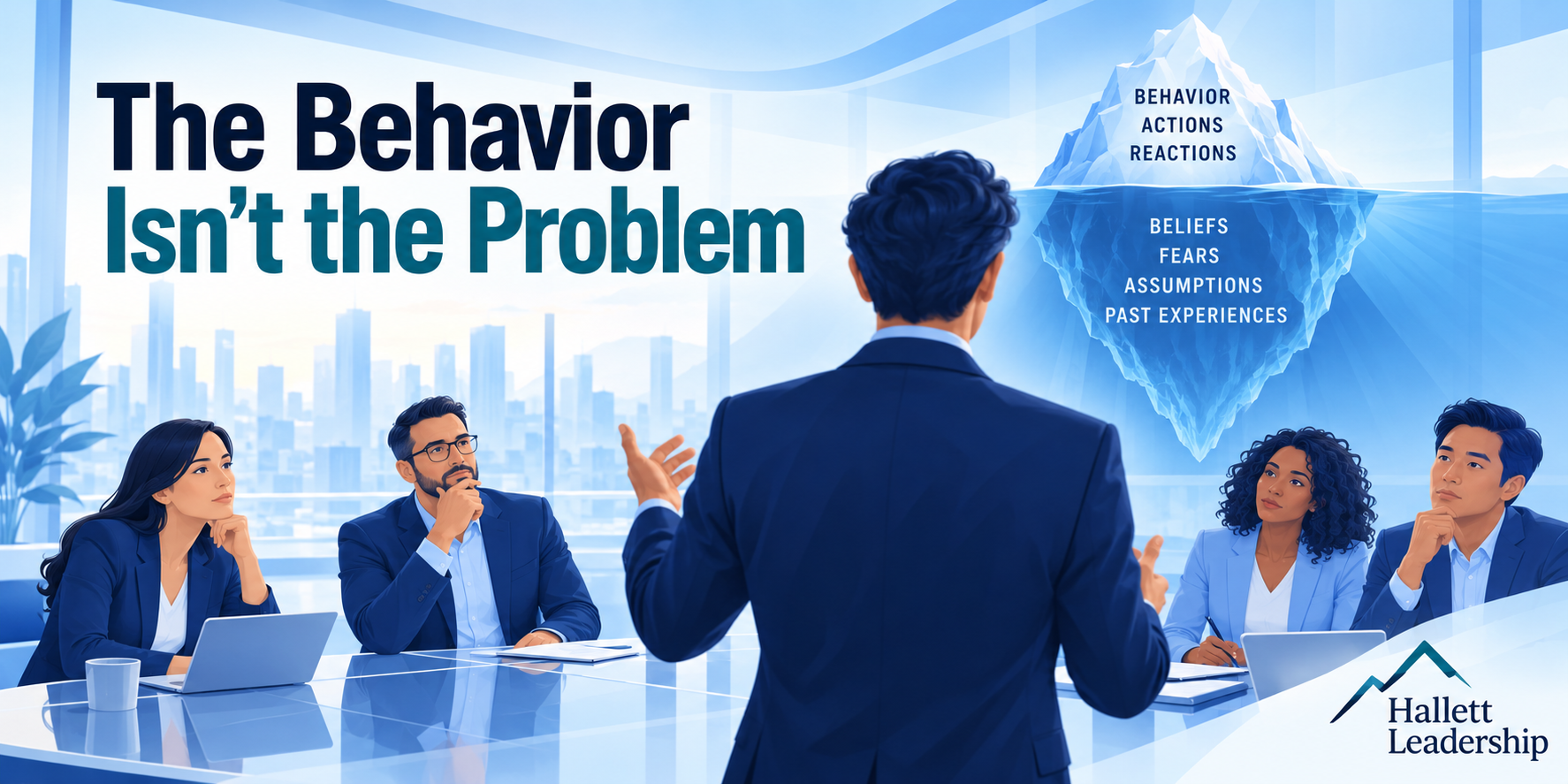
One of the most common mistakes in leadership development is trying to fix the behavior we see.
- A leader always needs to have the answer, so we tell them to listen more.
- They take on too much, so we tell them to delegate.
- They get defensive when challenged, so we tell them to stay open to feedback.
- They jump to the answer, so we tell them to ask more questions.
The advice is usually right.
But the behavior comes back. Especially under pressure.
That’s because we’re treating the symptom, not the source.
The Pattern Beneath the Pattern

Think about someone who has spent most of their career being rewarded for individual performance.
They know the answer. They solve the problem. They deliver the result.
We see them as the person who gets things done. That recognition matters.
Over time, though, being capable can become tied to something deeper: “This is how I prove my value.”
Then we promote them into leadership.
Suddenly, success requires something very different. Their job is no longer to have every answer. It’s to create an environment where other people can contribute, solve problems, and succeed.
That sounds simple. But inside, it can raise a very different question:
“If everyone else is doing the work, what value am I bringing?”
So they fall back on what has always worked.
- The leader jumps in with the answer.
- They take work back.
- They shut down ideas.
- They struggle to delegate.
From the outside, it looks like a control problem.
But those behaviors are the symptoms. The source is underneath: a fixed belief about what it takes to matter.
Most Limiting Behaviors Served a Purpose

Most limiting behaviors developed for a reason.
- Control may have helped someone succeed early in their career.
- Having the answer may have earned them recognition.
- Moving fast may have been rewarded.
- Avoiding conflict may have protected an important relationship.
- Perfectionism may have built a reputation for exceptional work.
These patterns often start as strengths or survival strategies.
Then the leader steps into a new role. The expectations change. The environment changes. But the old patterns stay.
What once helped them succeed starts to hold them back.
That’s why telling someone to stop doing something rarely works. The behavior is often covering a belief the leader has never fully recognized.
What Is the Behavior Protecting?

This is one of the most useful questions a leader can ask.
- When I take control, what am I afraid will happen if I let go?
- When I get defensive, what am I really protecting?
- When I need to have the answer, what am I afraid it says about me if I don’t?
- When I avoid the hard conversation, what am I afraid of losing?
These questions take us past the symptom. They take us into the fears, beliefs, and assumptions underneath the behavior. They get us to the source, which is the fear or belief driving the behavior.
That’s where transformation starts.
We Can't Change What We Can't See

Without awareness, we run on autopilot.
Pressure rises. The familiar pattern shows up. We control. We defend. We avoid. We take over.
This is where I use a simple framework: STOP–LOOK–CHOOSE.
Stop the automatic reaction.
Look honestly at what’s driving it.
Choose a response that reflects who you want to be, not the reflex.
When we understand what’s happening underneath, a small space opens between the trigger and the response. That space gives us choice.
- Maybe I don’t need to prove I have the answer.
- Maybe uncertainty doesn’t mean I’m losing control.
- Maybe disagreement isn’t a threat to my credibility.
- Maybe letting someone struggle through a problem is part of developing my team.
The behavior may still need to change. But now we’re not forcing a new behavior on top of the same old belief. We’re changing the source.
Leadership Growth Goes Deeper Than Behavior

There’s nothing wrong with practical leadership advice. Sometimes a leader does need a better tool, a clearer process, or a different way to communicate.
But when the same issue keeps coming back, even when you know what to do differently, it’s time to ask a different question.
Not: What should I do instead?
But: Why do I keep doing this in the first place?
That question can be uncomfortable. Yet, it only requires being at least 1% open to the possibility that you’re not seeing yourself clearly. And that can be the beginning of real change.
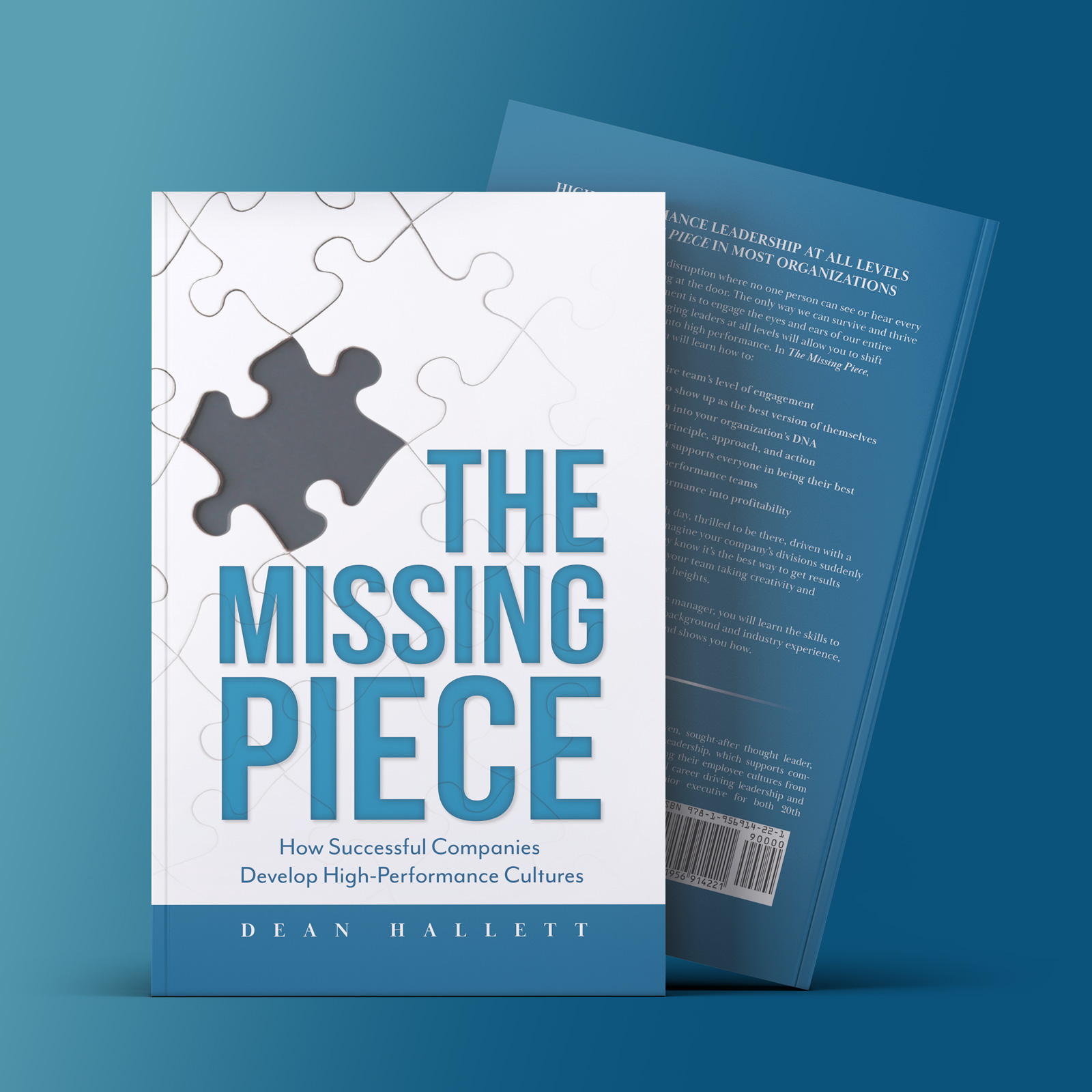
I wrote a whole book about this, The Missing Piece. Lasting leadership growth happens from the inside out. It’s not about performing the right behaviors. It’s about understanding yourself well enough to respond well when the pressure is on.
Sometimes the behavior isn’t the problem.
Most often, it’s the clue.